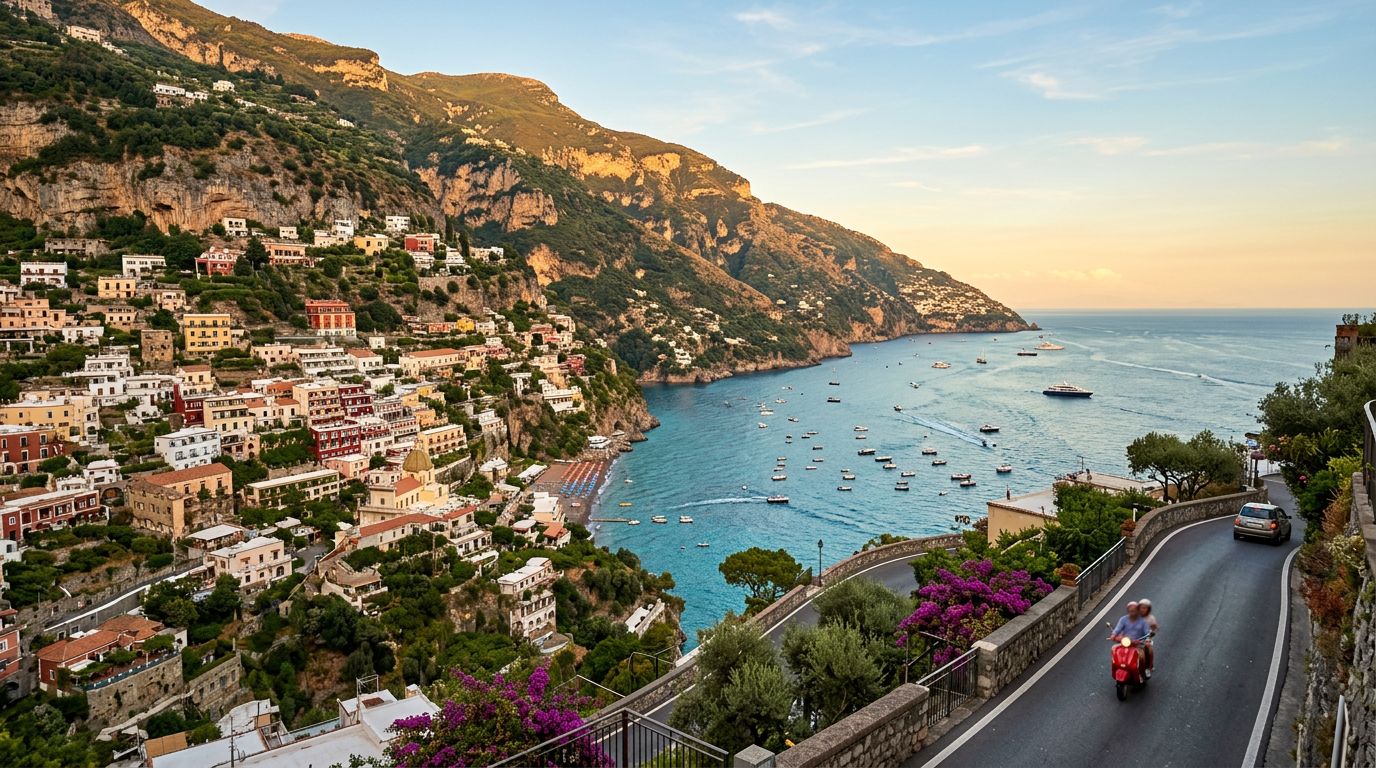
The Amalfi Coast carries a reputation as one of southern Italy's pricier destinations, but costs vary dramatically depending on which towns you choose and when you visit. Understanding the price landscape helps travelers decide where to allocate their budget and which corners to cut without sacrificing the experience.
Quick answer
Yes, the Amalfi Coast is expensive compared to other Italian regions, with mid-range travelers typically spending €150-250 per person daily during summer. Positano commands the highest prices, while towns like Atrani and Maiori offer budget-friendly alternatives. Costs drop significantly between November and March outside the peak season.
The Costiera Amalfitana stretches 50 kilometers along the Sorrentine Peninsula, and your expenses will shift considerably as you move between its thirteen comuni. Positano hotel rooms routinely exceed €300 per night in July and August, while a comparable stay in Praiano or Minori costs half that amount. The coastal road connects every settlement, but the geography creates natural price tiers—clifftop towns with limited space charge premiums that valley communities do not. Dining follows the same gradient. A seafood lunch overlooking the Tyrrhenian Sea in Positano averages €35-50 per person before wine, whereas family-run trattorias one town over serve similar portions of scialatielli ai frutti di mare for €18-22. The difference lies not in quality but in real estate—restaurants with terrace views pay rents that get passed to diners. Local buses operated by SITA Sud cost €1.30-2.50 per ride regardless of distance, making public transport the single budget item that remains consistent across the coast. Accommodation represents the largest variable expense when determining if Amalfi Coast is expensive for your travel style. Four-star properties in Amalfi and Ravello typically charge €180-280 per night in shoulder season, while agriturismi and pensioni in hillside frazioni offer rooms from €70-120. Many visitors split their stay between a splurge property and a modest base, banking savings from the latter to afford the former. Private boat excursions to the Grotta dello Smeraldo or Capri run €80-150 per person, but shared group departures from Amalfi port reduce that to €25-40. The region imposes no entrance fees for its beaches, hiking paths, or town centers, making the coast itself a zero-cost attraction. Chiesa di Santa Maria Assunta in Positano, the Chiostro del Paradiso in Amalfi, and the Villa Rufolo gardens in Ravello charge small admissions of €3-7, yet most architectural landmarks remain free to enter. Wine estates in Furore and Tramonti offer tastings from €15-30, providing an affordable alternative to restaurant dining while showcasing Campania's lesser-known viticulture.
“The coastal road connects every settlement, but the geography creates natural price tiers—clifftop towns with limited space charge premiums that valley communities do not.”
The Amalfi Coast is a premium destination where daily expenses vary significantly based on accommodation choices and dining preferences. Travelers should account for fluctuations in costs driven by high demand during peak months.
How to spend less
Verdict: A daily budget typically ranges from 150 EUR for modest travelers to over 400 EUR for those seeking comfortable, upscale experiences.
To balance costs and crowd levels, the best arrival window is 08:00–10:00, which avoids peak daytime congestion and midday heat. Visiting during shoulder months provides more favorable pricing compared to the high season of July and August.
Mild, 15°C–22°C. Ideal for outdoor exploration.
Spring offers lower accommodation rates before the summer surge.
Warm, 18°C–25°C. Comfortable for travel.
Temperatures remain pleasant and lodging costs often decrease.
—
Arriving between 08:00–10:00 provides quieter access to popular towns. It minimizes wait times for local transport and dining.
Verdict: The most effective way to manage expenses is to visit Tuesday to Thursday during April or October, ensuring an arrival window of 08:00–10:00.
The Amalfi Coast is located in the Province of Salerno, Italy. Public transport remains the most efficient way to access the region while managing travel expenditures.
Circumvesuviana train from Naples to Sorrento
SITA Sud bus from Sorrento to Amalfi
Travelmar ferry from Salerno to Amalfi
SS163 Amalfitana road
The best arrival window is 08:00–10:00. This timing avoids peak daytime crowds and midday heat in popular towns.
Navigating the Amalfi Coast requires strategic planning to manage costs while ensuring a smooth experience.
Use SITA buses to travel between towns instead of private taxis or car rentals to significantly reduce transportation costs. Purchase tickets at local tobacco shops or newsstands before boarding to ensure you have them ready.
The Path of the Gods and other public hiking trails offer extensive views of the region without any associated entrance fees. These routes connect various villages and provide a way to see the coastline while avoiding crowded tourist transport.
Staying or spending time in towns slightly set back from the main coastal road often results in lower prices for services and goods. Inland villages such as Tramonti or Scala offer a quieter atmosphere compared to the primary coastal hubs.
Carry a reusable bottle and refill it at the numerous public water fountains found throughout towns in the Province of Salerno. This practice eliminates the need to purchase bottled water, which is often marked up in high-traffic tourist zones.
Incorporate visits to local vineyards away from the primary tourist thoroughfares to experience the region's viticulture at standard pricing. Refer to our wine tour booking widget to identify authentic local producers rather than commercial storefronts.
Everything you need to know about is amalfi coast expensive
Determining if the region is costly depends largely on your choice of accommodation and dining style. While luxury options are prominent, travelers can manage expenses by utilizing public ferries and regional transport options.
There is no general entrance fee to visit the region, as it is a public destination with an entry fee of 0 EUR. This allows visitors to explore the cliffside villages and coastal paths without upfront admission costs.
To maximize your visit, we recommend arriving between 08:00 and 10:00 to avoid peak daytime crowds and midday heat. Planning your trip during shoulder seasons can also make the region feel more accessible in terms of crowds and overall logistics.
Booking structured experiences allows you to streamline your itinerary and navigate the local geography efficiently. These tours provide curated access to regional vineyards and landscapes, helping you gain value from your travel time.
You can reduce the impact of peak travel hours by adhering to our suggested arrival window of 08:00–10:00. Staying in towns slightly removed from the primary hubs can also assist in maintaining a controlled travel budget.
Visitors should factor in regional ferry tickets, local bus fares, and dining variations as they move through the Province of Salerno. Planning your transit early can help prevent budget surprises while you explore the Italian coastline.