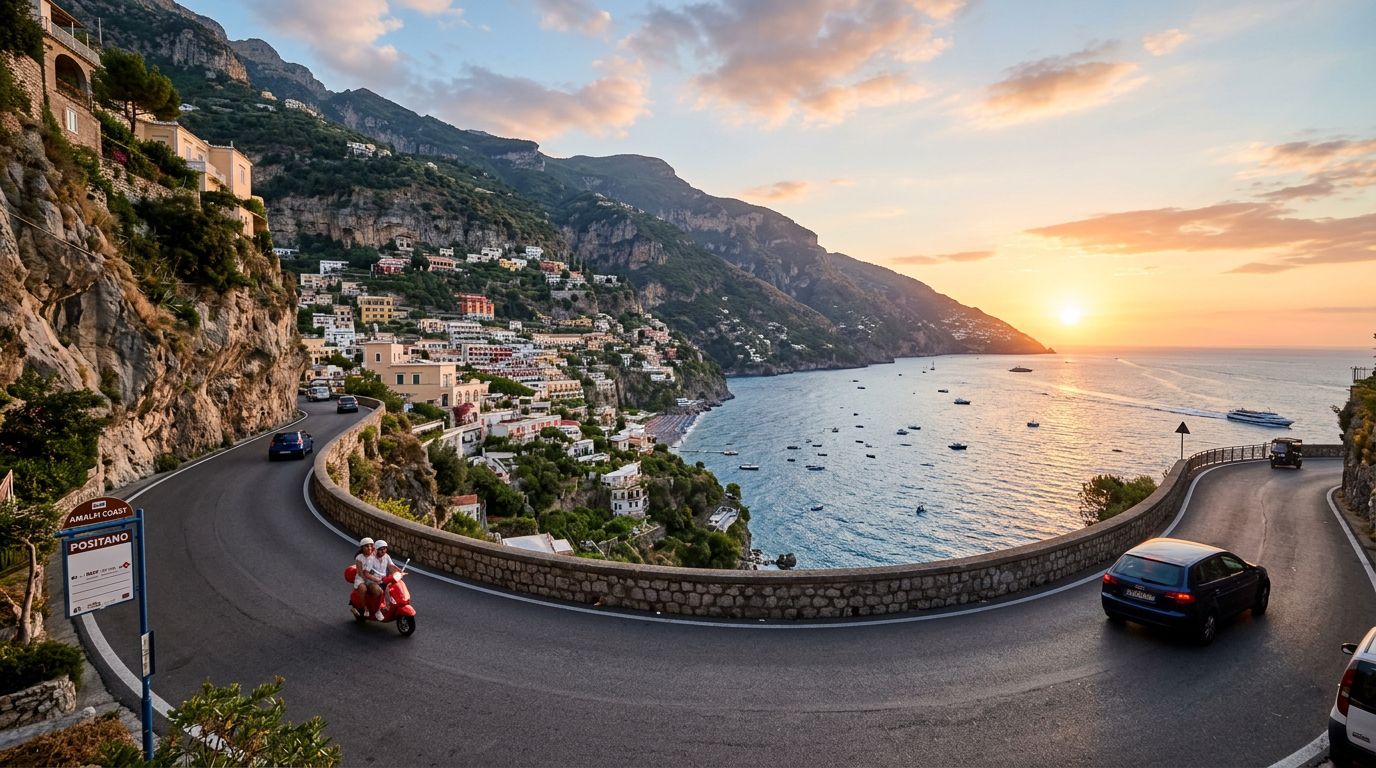
The Amalfi Coast draws millions of visitors each year to its 50-kilometer stretch of cliffside towns and Mediterranean views. Whether the crowds, narrow roads, and premium prices justify the journey depends on what you value in a coastal destination. This guide breaks down the practical realities—access, timing, and logistics—so you can decide if the Costiera Amalfitana belongs on your itinerary.
Quick answer
Is Amalfi Coast worth visiting? Yes, if you prioritize dramatic coastal scenery, historic Mediterranean villages, and accessible public roads over solitude and budget travel. The coastline itself is free to explore year-round, though peak summer months bring cruise ship crowds and congested roadways. Arriving between 07:00 and 10:00 avoids the worst traffic on the narrow SS163 coastal route.
The Costiera Amalfitana became a UNESCO World Heritage Site in 1997 not for a single monument but for an entire landscape—13 municipalities perched between the Lattari Mountains and the Tyrrhenian Sea. The vertical topography that makes the coast visually distinctive also creates its biggest logistical challenge: a single two-lane road carved into cliffs handles all through traffic, from Sorrento to Vietri sul Mare. Whether visiting the Amalfi Coast delivers value depends on your tolerance for density and expense. Summer weekends see coach buses, rental cars, and cruise ship excursions converging on the same hairpin turns and parking zones. Positano's population of 4,000 swells to over 15,000 daily visitors in August. Accommodation prices in cliffside hotels can exceed €400 per night, and restaurant menus in the main piazzas reflect tourism pricing. Yet the same factors that create congestion—vertical villages, limited development space, protected coastline—preserve the scenery that draws visitors in the first place. The coastline's appeal lies in specifics, not abstractions. Ravello's Villa Cimbrone gardens offer 300-meter elevation views without requiring a boat or cable car. Amalfi's Duomo di Sant'Andrea, with its Arab-Norman campanile and bronze doors cast in Constantinople, sits steps from the public beach. Atrani, wedged into a narrow gorge, remains a functioning fishing village despite sitting two kilometers from Amalfi town. These are not reconstructed tourist sites—they are working communities built into extreme geography. Free public access to the coastal road and beaches means the Amalfi Coast rewards flexible visitors who can shift plans around weather, crowds, and road conditions. The early morning arrival window matters more here than at most European destinations because afternoon congestion on the SS163 can double travel times between towns. Whether the Costiera Amalfitana justifies the effort comes down to how you weigh visual drama against logistical friction—and whether you can structure your visit to minimize the latter.
“The same vertical geography that creates the coast's appeal also generates its biggest logistical challenge—a single two-lane road handling all through traffic between sea and mountain.”
The Amalfi Coast is located south of the Sorrentine Peninsula, accessible primarily via Naples or Salerno. Travelers typically reach the region by connecting through these transit hubs before transitioning to coastal transport.
Circumvesuviana line from Napoli Garibaldi to Sorrento then Sita Bus to Amalfi
SS163 Amalfitana road via Vietri sul Mare or Sorrento
Ferry from Salerno (Concordia) or Naples (Beverello) to Amalfi or Positano
Sita Sud line from Salerno station to Amalfi
To avoid heavy congestion on the narrow SS163 road, plan your arrival between 07:00–10:00. Relying on ferry services during peak hours often provides a more reliable alternative to road travel.
Access to the Amalfi Coast is public, meaning there are no entry fees for general visitation of the coastal roads or common areas. Costs only apply when booking private services or specialized excursions.
Verdict: A typical adult pays 0 EUR for general access, though costs vary based on individual choices for private tours or experiences.
Visitors often misjudge the Amalfi Coast's infrastructure constraints and time requirements. These logistical oversights can turn a well-planned visit into a stressful experience.
Booking accommodations in only one town for a multi-day visit
The coastal road (SS163) makes town-hopping time-consuming—expect 30–60 minutes between adjacent villages during peak hours. Base yourself centrally in Amalfi or Positano, or split your stay between two towns to minimize daily transfers.
Planning to drive the coast without experience on narrow roads
The SS163 averages 3 meters wide with frequent blind hairpin turns, no shoulder, and two-way traffic including tour buses. First-time drivers should either hire a local driver, use SITA buses, or limit driving to early morning (before 08:00) when traffic is lightest.
Attempting to visit 4+ towns in a single day
Even neighboring towns require 45–90 minutes door-to-door when accounting for parking searches, walking from lots to town centers, and summer traffic. Plan 2–3 towns maximum per day, or focus on one town with a structured wine tour to avoid logistical fatigue.
Underestimating August and cruise-ship day congestion
Cruise ships disgorge 3,000+ passengers into Amalfi and Positano simultaneously, typically 09:00–17:00. Check port schedules at amalfitablet.it and arrive before 09:00 or after 18:00, or visit shoulder months (April–May, September–October) entirely.
Skipping advance reservations for popular restaurants and wine experiences
Coastal restaurants and wine cellars in Ravello and Furore book out 2–4 weeks ahead in high season. Reserve dining and tasting experiences when you book accommodation, not upon arrival.
The Amalfi Coast is a public region accessible to visitors at all times. The coastal roads and public areas remain open throughout the week.
Everything you need to know about is amalfi coast worth visiting
Deciding if the Amalfi Coast is worth visiting often depends on your ability to navigate the coastal roads early in the day. Many travelers find that a structured excursion allows for a more relaxed experience of the local Mediterranean landscape.
If you are wondering if the Amalfi Coast is worth visiting, consider that the region experiences significant road congestion. Planning your travel around the best arrival window of 07:00–10:00 can greatly enhance the quality of your visit.
To explore the iconic Italian peninsula, visitors often opt for guided tours to avoid the stress of driving on winding, narrow streets. This allows you to focus on the cliffside villages and Tyrrhenian Sea views rather than navigation.
For those short on time, knowing whether the Amalfi Coast is worth visiting involves prioritizing specific coastal towns over trying to see the entire region at once. Focused visits help you avoid the frustration of traffic and make the most of your day.
A frequent error when determining if the Amalfi Coast is worth visiting is failing to account for the heavy cruise ship traffic that impacts road accessibility. You can avoid this by timing your movements carefully and using public or managed transport.
There is an entry fee of 0 EUR for the public roads and coastal access, as these are open to the general public. While local attractions or specific experiences may have their own costs, the roads themselves remain accessible at no charge.